Home / Services / Containment and Protective Enclosures

Containment and Protective Enclosures

We design enclosures that contain fragments and control blast pressure from an energetic failure, so an accident in one room stays in that room.

Scope of work

What PNH Does

Equipment failure containment

Containment for energetic equipment failures, such as flywheel rotor burst.

Test cells

Hardened cells for confined explosions with controlled pressure release.

Blast-resistant modules

Structural and blast design of modular and containerized protective buildings.

Rated components

Performance specification for rated doors, glazing and relief vents.

Verification

Review of vendor data sheets and test evidence against the specified performance.

Flywheel rotor burst containment
Flywheel rotor burst containment: plan of the burst and section through a below-grade vault Left, plan: a rotor bursts into three fragments that move tangentially and are stopped by a steel containment ring inside a reinforced concrete vault. Right, section: the flywheel sits in a below-grade vault with an anchored lid that restrains axial movement. PLAN SECTION Reinforced concrete vault Steel containment ring Vacuum housing Rotor fragments move tangentially Anchored lid restrains axial movement Grade Below-grade reinforced concrete vault Rotor Motor Base Schematic. Not to scale. Not for design.
Rotor fragments leave tangentially and are stopped by the containment ring, while an anchored lid restrains axial movement in the below-grade vault.
Blast-resistant module near a process unit
Blast-resistant module near a process unit, with the rated components that protect occupants Elevation of a process unit with a potential vapor cloud explosion zone and blast wave arcs travelling toward a blast-resistant module. The module is cut away to show stiffened steel walls and roof, a blast door and window on the side away from the source, a blast valve on the air intake and anchorage to the foundation. Process unit Potential vapor cloud explosion zone Blast wave Separation set by the siting study Occupied space Stiffened steel walls and roof Blast valve on air intake Blast-rated window Blast door, away from the source Anchored to foundation Schematic. Not to scale. Not for design.
The siting study sets separation; the module's structure, door, window, blast valve and anchorage are designed for the resulting blast load.

Independent and Engineer-Led

PNH does not make, sell or install protective products. Analysis is performed in house with PNH's own tools and issued under the review of PNH's Chief Technical Officer. Every assumption is documented and traceable to the governing criteria.
What a rated component specification covers
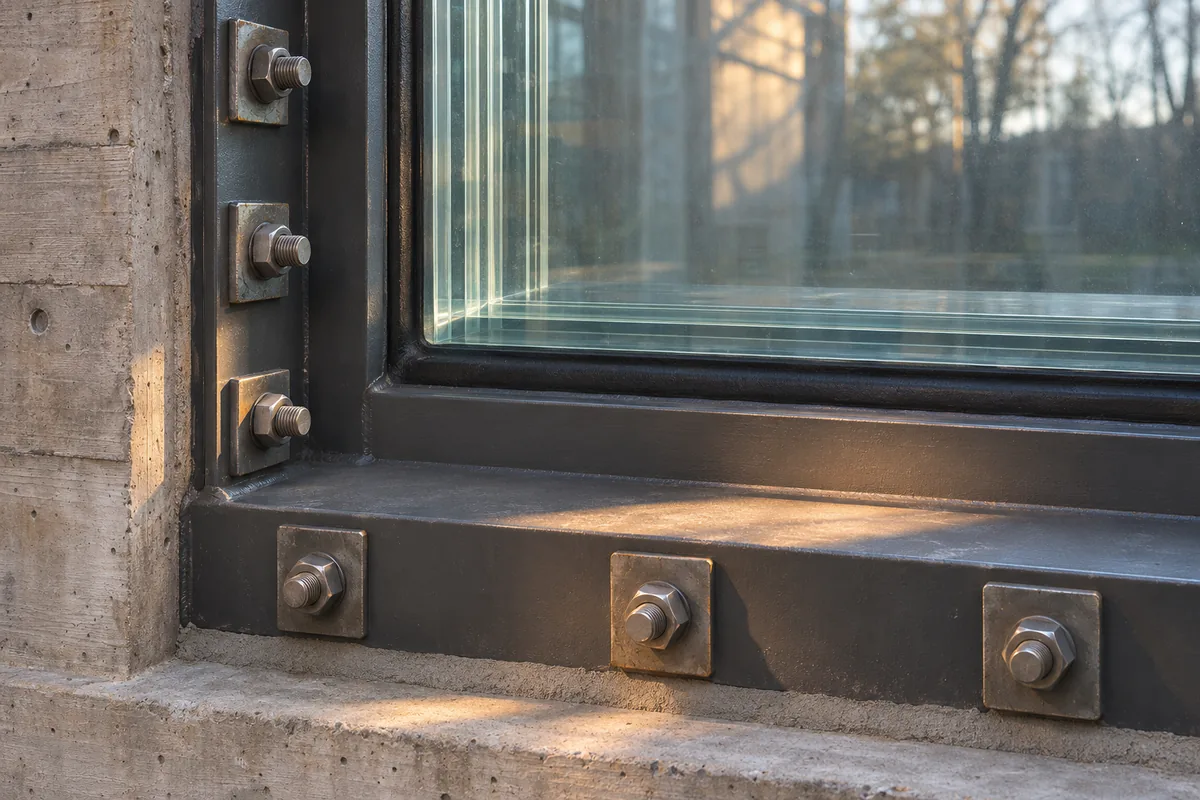
Rated doors, glazing and vents: what a PNH performance specification covers Three cards. Blast door: design load, rebound, frame and anchorage, operability and evidence. Blast-resistant glazing: laminated glass and bite, frame and anchorage, hazard rating, edge retention. Vents: blast valves on air openings and relief panels with opening pressure and vent direction. Blast doors Design blast load from the design basis Rebound and latching under load Frame, hinges and anchorage to structure Operable after the event for egress Test or analysis evidence Blast-resistant glazing Laminated glass make-up and bite Frame and anchorage capacity Glazing hazard rating to the named test standard Edge retention: structural silicone or mechanical Blast valves and relief vents Blast valves close on the pressure wave Leakage limit and reopening after the event Relief panels: opening pressure and vent direction Debris from vented panels kept in a safe zone PNH specifies performance and reviews vendor submittals against it. Vendors supply tested products; PNH does not make or sell them. Illustrative. Not for design.
PNH specifies performance for doors, glazing and vents and reviews vendor data against it; vendors supply the tested products.
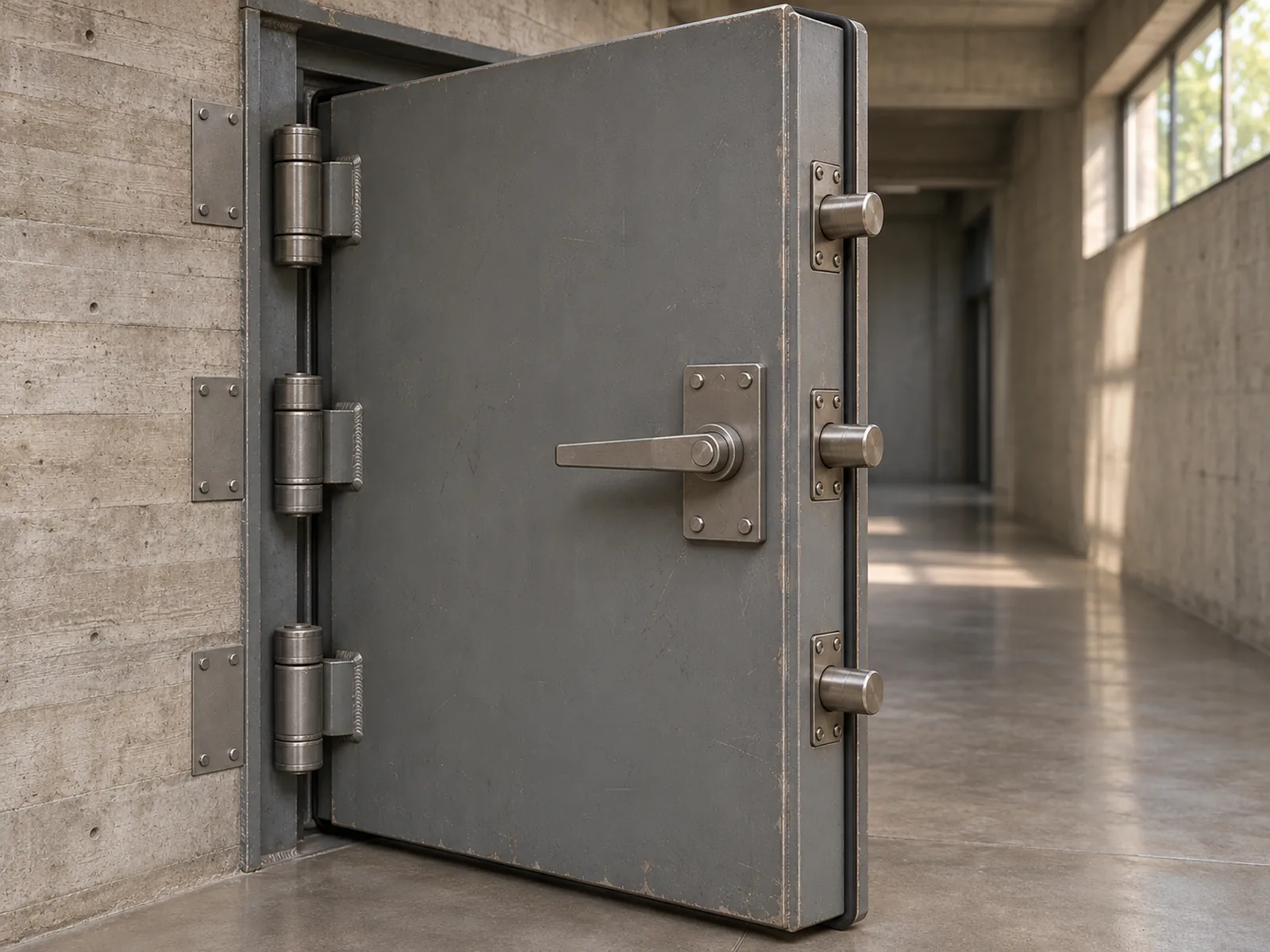
Heavy steel blast door
Close view of a heavy steel blast door with large hinges and a deep frame anchored in a reinforced concrete wall
Rated doors are judged on load, rebound, anchorage and operability after the event.

Containment and Protective Enclosures: Common Questions

What is a blast-resistant module (BRM)?

A BRM is a modular or containerized building designed to protect occupants and equipment from an accidental explosion nearby, typically at process plants. PNH designs the structure and specifies the rated doors, windows and vents.

Do you design flywheel containment?

Yes. PNH's technical lead has designed containment for energetic equipment failures, including flywheel rotor burst, and the test program to verify it.

Discuss Your Containment and Protective Enclosures Project

Send us the site and the deadline. A short note on the site, what concerns you and when the tender or decision is due is enough to start. We reply within one business day.

  • The siteAn address, a site plan or a few photos.
  • The concernThe threat question, an incident or a client requirement.
  • The criteriaAny standard or client specification that applies.
  • The dateWhen the tender, review or decision is due.

Email [email protected] or call +1-818-253-9557

Thank you. PNH will reply within one business day.