Home / Services / Forensic Engineering and Expert Witness

Forensic Engineering and Expert Witness

When a barrier, structure or perimeter fails, we find out why and explain it clearly to owners, insurers, counsel and the court.

Scope of work

What PNH Does

Failure investigation

Vehicle impact, perimeter breach, blast and structural failures.

Independent review

Barrier products, installations and crash-test evidence, reviewed for owners, manufacturers and specifiers.

Expert testimony

Reports, depositions and testimony in vehicle-impact and perimeter-breach matters.

Counsel support

Technical briefing, document review and case strategy support for legal teams.
How an investigation runs
Forensic engineering workflow: preserve the evidence, analyze, report and testifyFour stages of a PNH forensic engagement: preserve the evidence, analyze the event against the evidence and test records, report findings tied to the evidence, and support deposition and trial testimony, independent of any product interest. 1 Preserve the evidence Site inspection and measurements Damage and debris mapped and photographed Video, drawings and test records gathered Chain of custody kept 2 Analyze Event reconstructed from the physical evidence Installation compared with test evidence and design Structure and foundation checked Each hypothesis tested against the facts 3 Report Findings tied to the evidence Standards cited clause by clause Figures a non-engineer can follow 4 Testify Deposition and trial support Exhibits that explain the physics Opinions held to the evidence Independent throughout: PNH has no stake in any barrier or protective product. Illustrative workflow. Scope is set case by case with counsel.
From preserved evidence to testimony, every opinion is tied back to what was measured and recorded.
Crash-test evidence review
Crash-test evidence review: test report compared with the barrier as installed, item by itemIllustrative review table comparing what a crash test report shows with how a barrier was installed: standard, test vehicle, impact speed condition, impact angle, penetration, foundation, configuration and site conditions, each marked matches, verify or differs. CRASH-TEST EVIDENCE REVIEW Illustrative example Item Test report shows As installed Review Standard ASTM F2656, edition stated Specification cites the same standard Matches Test vehicle Medium-duty truck (M) Threat vehicle is a medium-duty truck Matches Impact speed M50 test condition Speed this line can see, from the approach study Verify Impact angle Perpendicular test impact Oblique approach possible at a corner Verify Penetration P1 Penetration the site can accept Matches Foundation Continuous reinforced concrete footing Shallower isolated footings Differs Configuration Tested spacing, height and number of units Wider gap at a drainage crossing Differs Site conditions Firm, level ground Soft soil and a downhill run-up Verify Ratings from different standards are not interchangeable. A rating holds only for the conditions that were tested. Illustrative example, not a real case. Designations shown are published standard designations.
A rating holds only for the conditions tested, so each item in the test report is compared with the installation.
Tested foundation, installed foundation
Bollard foundation as tested compared with an example installation that differsTwo schematic elevations. Left: crash-rated bollards set in a continuous reinforced concrete footing as tested. Right: an example installation with shallower isolated footings and a utility crossing, where the post can rotate in the soil under impact. AS TESTED Continuous reinforced footing AS INSTALLED, EXAMPLE Shallower isolated footings Impact Impact 1 2 3 Posts embedded in one reinforced concrete footing, with the depth, size and reinforcement that were tested. Shallower isolated footings and a utility crossing. Under impact the post can rotate in the soil. 1 Footing size and embedment 2 Utility crossing under the line 3 Post rotation and soil heave Schematic. Not to scale. Not for design. Illustrative example, not a real case.
The same post can perform very differently when the foundation differs from the one that was tested.
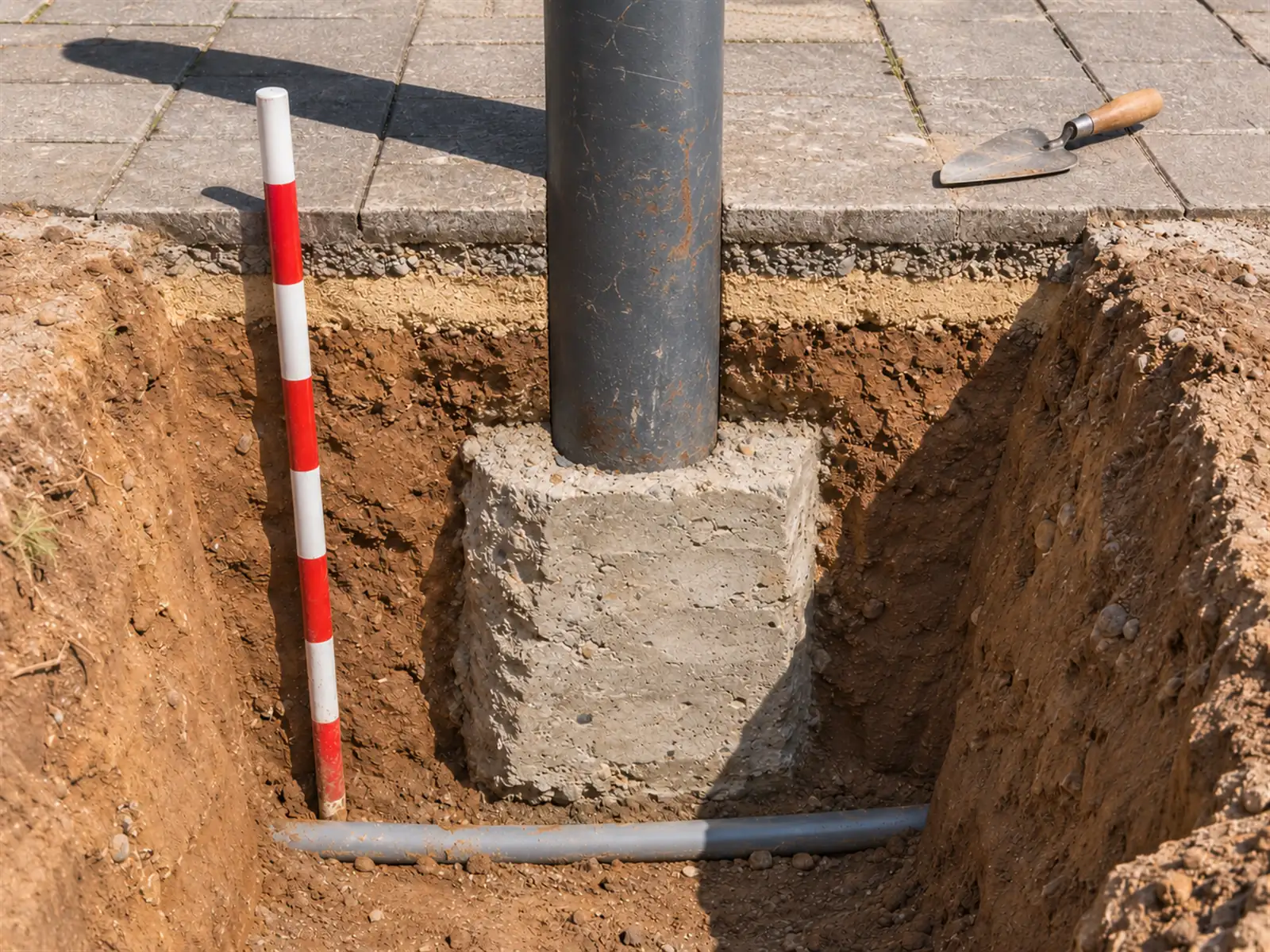
Foundation exposed for inspection
Excavated trench exposing the concrete footing and embedded steel post of a bollard, with a plain banded survey rod for scale
Excavating a footing shows what was actually built.

Independent and Engineer-Led

PNH does not make, sell or install protective products. Analysis is performed in house with PNH's own tools and issued under the review of PNH's Chief Technical Officer. Every assumption is documented and traceable to the governing criteria.

Forensic Engineering and Expert Witness: Common Questions

What kinds of cases do you take?

Vehicle impact and perimeter breach matters, barrier and bollard performance disputes, crash-test evidence review, and blast and structural failures.

Can you review a barrier's crash test report?

Yes. PNH reviews crash-test evidence against the standard it claims, including test vehicle, speed, angle, penetration and the foundation that was tested.

Discuss Your Forensic Engineering and Expert Witness Project

Send us the site and the deadline. A short note on the site, what concerns you and when the tender or decision is due is enough to start. We reply within one business day.

  • The siteAn address, a site plan or a few photos.
  • The concernThe threat question, an incident or a client requirement.
  • The criteriaAny standard or client specification that applies.
  • The dateWhen the tender, review or decision is due.

Email [email protected] or call +1-818-253-9557

Thank you. PNH will reply within one business day.