Home / Services / Passive Anti-UAV Protection

Passive Anti-UAV Protection

We engineer passive protection that keeps a drone-delivered payload away from the equipment a facility depends on, or limits what it can do there, for the threat agreed for the site.

Scope of work

What PNH Does

Threat definition

Credible drone threats, approach directions and the payload effects the protection must resist.

Asset prioritization

The equipment and buildings whose loss would stop operations, ranked for protection.

Protection concepts

Concepts developed for each asset and reviewed with the client before design.

Engineering design

Structural design of the selected protection, with interface loads and quantities.

Phased delivery

Design basis and concepts first, then design, so each phase is approved before the next.
Passive anti-UAV protection in layers
Passive anti-UAV protection in layers: overhead screen, side screens, hardened enclosure and standoff Elevation of a critical transformer under an overhead screen canopy with side screens, and a control building with a hardened roof. Three drone approach paths end at the screens or the hardened roof, away from the asset. Active layer, by others: detection, jamming, interception 1 2 3 4 Critical asset Control building 1 Overhead screen Holds a payload away from the asset. 2 Side screens Cover low-angle approaches. 3 Hardened enclosure Roof and walls resist the payload at contact. 4 Standoff Space between screen and asset limits effects. Schematic. Not to scale. Not for design.
Screens, hardened enclosures and standoff limit what a drone-delivered payload can do; detection and interception are active layers provided by others.
Drone approach envelope over a generic substation
Drone approach envelope over a generic substation plan, with protected and ranked assets Plan of a generic substation: perimeter fence, three transformers with firewalls under overhead screen canopies, a hardened control building, a switchyard and an auxiliary building. Drone approach arrows come from every direction. Assets carry priority numbers. Switchyard Control building Auxiliary Transformers with firewalls 1 1 1 2 3 3 Overhead screen canopy Hardened enclosure Credible drone approach, any direction 1 Asset priority, agreed with the client Approach envelope around the site Generic layout. Schematic. Not to scale. Not for design.
A drone can arrive from any direction, so assets are ranked with the client and the highest priority ones are screened or hardened first.
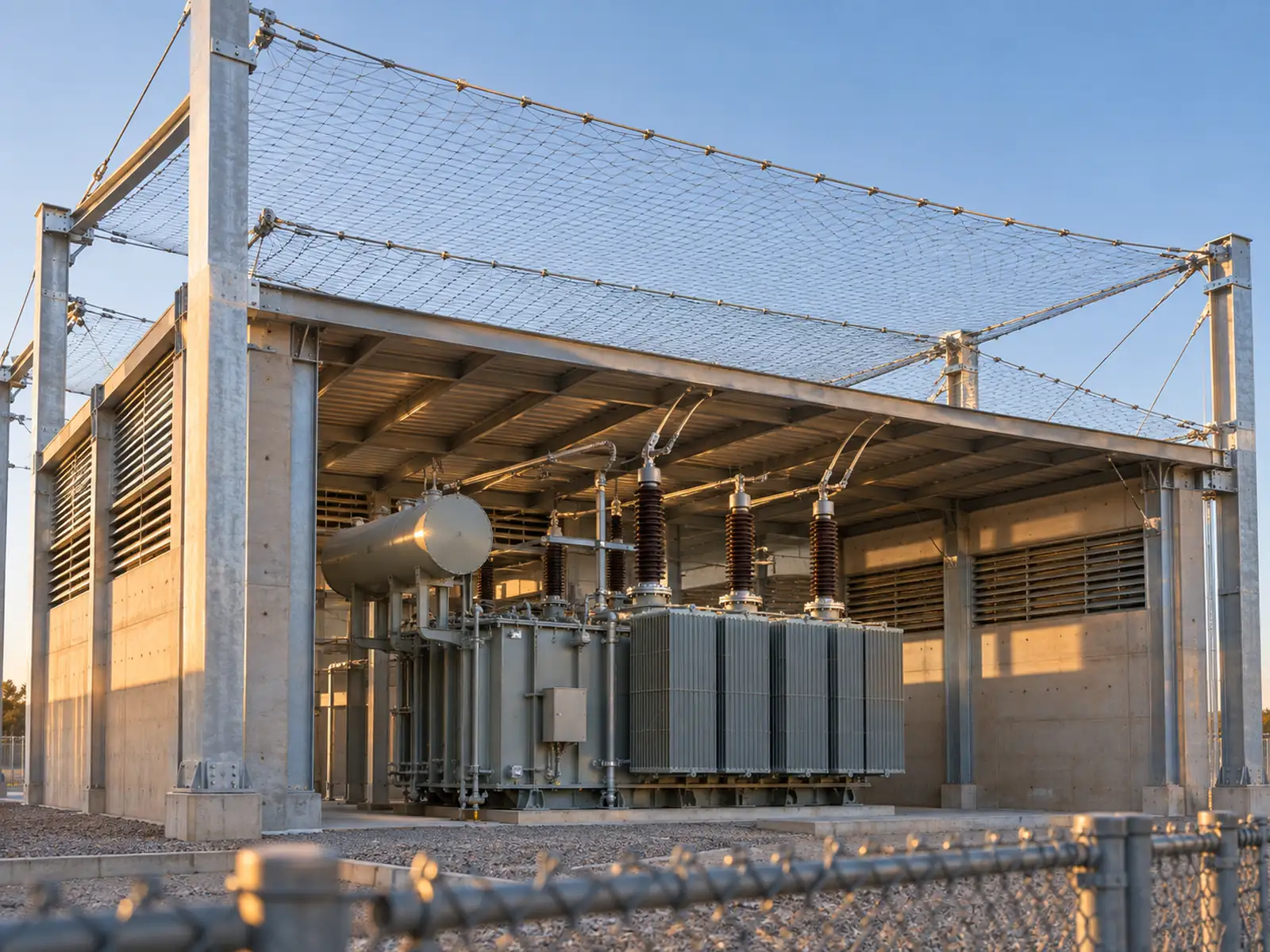
Protective screen canopy over a transformer
Steel-framed canopy with a tensioned steel mesh roof and partial side screens over a large power transformer in a substation yard
Concept visualization of an overhead screen canopy that holds a payload away from the equipment below.

Independent and Engineer-Led

PNH does not make, sell or install protective products. Analysis is performed in house with PNH's own tools and issued under the review of PNH's Chief Technical Officer. Every assumption is documented and traceable to the governing criteria.

Phased delivery with client approval at each gate
Phased delivery of passive anti-UAV protection: design basis, concepts, then engineering design Three phases separated by client approval gates. Phase 1 defines the threat and ranks the assets. Phase 2 develops protection concepts for each priority asset. Phase 3 designs the selected protection with interface loads and quantities. PHASE 1 Design basis PHASE 2 Protection concepts PHASE 3 Engineering design Credible drone threats, approach directions and payload effects Asset priority list Main transformers Control building Switchgear Auxiliaries Example ranking only Options developed for each priority asset Canopy Enclosure Screen Reviewed with the client before design Structural design of the selected protection Interface loads for foundations and supports Quantities for pricing and procurement Design basis memorandum and asset priority list Protection concept report Design report with interface loads and quantities Client approval before the next phase starts
Design basis and concepts come first, then engineering design, so each phase is approved before the next begins.

Passive Anti-UAV Protection: Common Questions

Is passive anti-UAV protection the same as counter-drone systems?

No. Detection, jamming and interception systems are active measures provided by others. PNH engineers the passive layer: structures, screens and enclosures that limit what a payload can do if a drone reaches the site.

Which assets are usually protected first?

The equipment whose loss would stop operations, such as transformers, control buildings and critical process units. PNH ranks assets with the client before any concept is developed.

Discuss Your Passive Anti-UAV Protection Project

Send us the site and the deadline. A short note on the site, what concerns you and when the tender or decision is due is enough to start. We reply within one business day.

  • The siteAn address, a site plan or a few photos.
  • The concernThe threat question, an incident or a client requirement.
  • The criteriaAny standard or client specification that applies.
  • The dateWhen the tender, review or decision is due.

Email [email protected] or call +1-818-253-9557

Thank you. PNH will reply within one business day.